
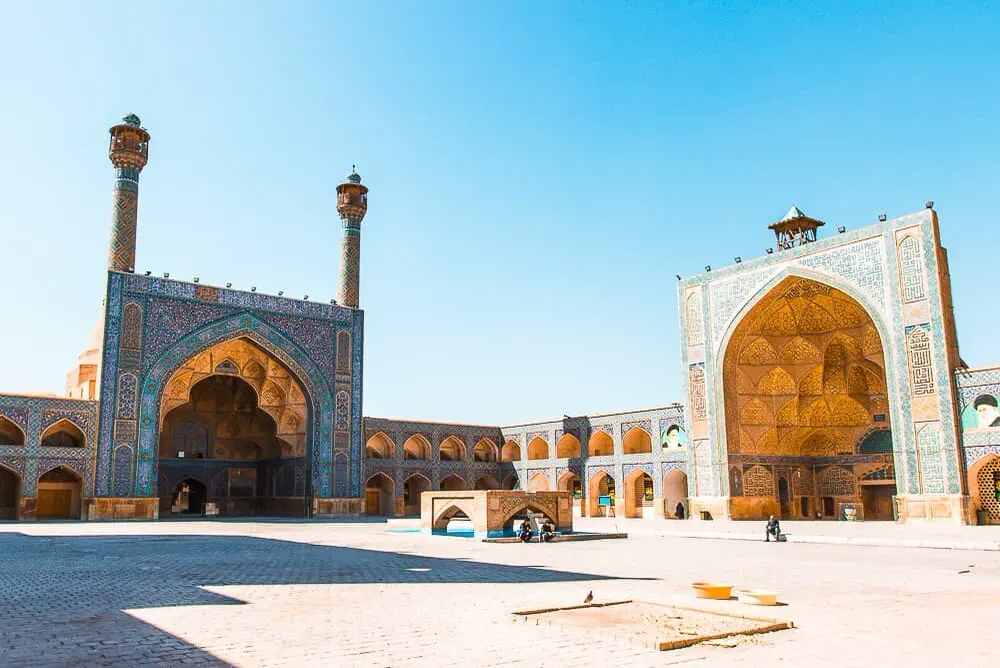
Naqsh-e Jahan Square combines monument, market, movement, and changing light. The experience is often in the relationship among these parts rather than a single viewpoint.
Visit with context
Places become more legible when they are given enough time, related to their wider landscape, and connected to the city or route around them.
Part of a considered route
This guide does not set a visit duration, ticketing arrangement, or fixed programme. Those practical considerations belong to a future journey brief.
A square best understood from its edges
Naqsh-e Jahan Square is not only a central view. Its proportions, surrounding architecture, market edges, changing light, and everyday movement become clearer when a visit includes time to walk, pause, and return.
The value of the place is often in the relationship among its parts, rather than in completing a quick circuit of named structures.
Pair scale with detail
A broader architectural space can be balanced with smaller observations: tile, thresholds, craft, shade, and the ways people move through the surrounding city. This balance gives a visit more texture.
There is no fixed duration or programme here. The right amount of time follows the pace of the wider Isfahan chapter.
Part of a city, not separate from it
The square is most useful in a route when it remains connected to Isfahan’s bridges, bazaars, neighbourhoods, and urban life. A good day leaves enough time for that wider context.
Use the Isfahan guide to understand how this place can sit within a measured city visit.