
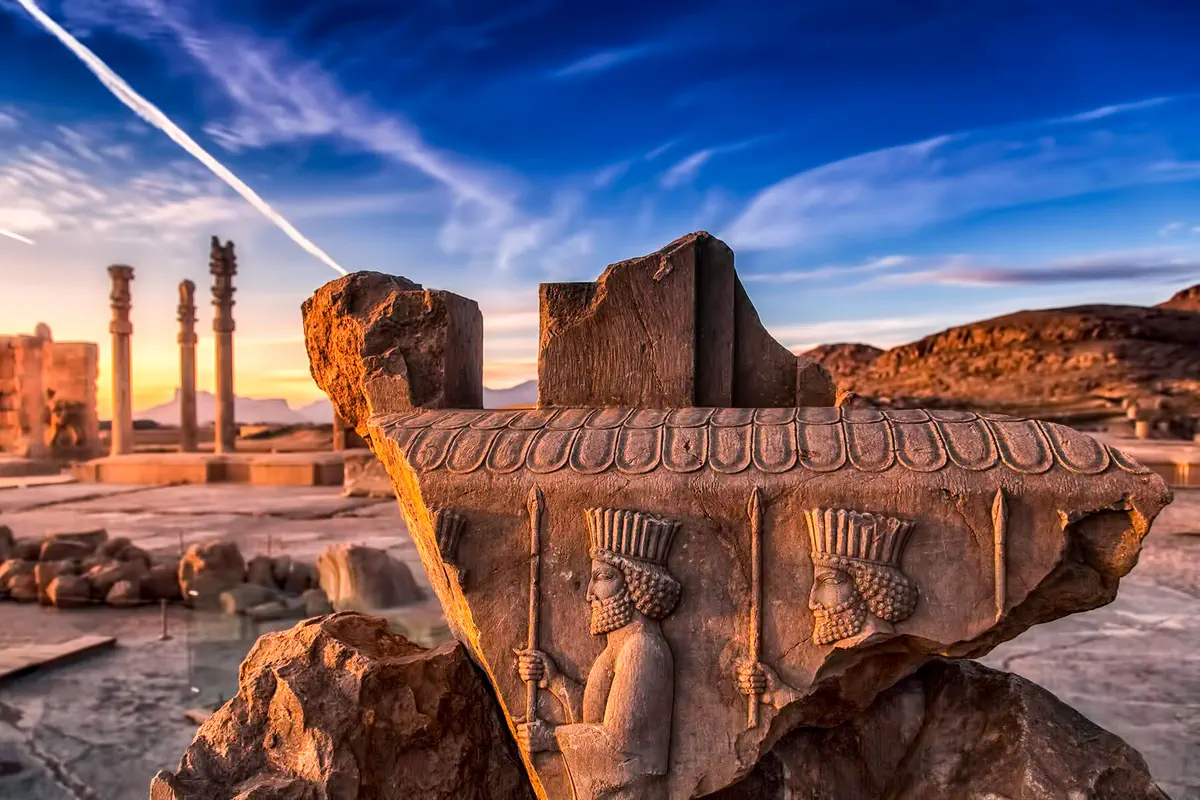
Pasargad offers a contrasting way to encounter the Achaemenid period: open landscape, dispersed remains, and a slower register than an urban monument.
Visit with context
Places become more legible when they are given enough time, related to their wider landscape, and connected to the city or route around them.
Part of a considered route
This guide does not set a visit duration, ticketing arrangement, or fixed programme. Those practical considerations belong to a future journey brief.
A different register of the Fars landscape
Pasargadae offers a more open and dispersed encounter with the ancient landscape than a dense urban monument. Its sense of scale comes partly from space, distance, and the relationship between remains and the surrounding ground.
It benefits from a visit that is not rushed by a tightly packed sequence of unrelated stops.
Let the route carry the context
The journey to a site can be part of the experience, especially when it connects city, countryside, and archaeological landscape. Planning should account for that transition rather than treating it as unimportant time.
Practical details such as timing, access, and entry arrangements are deliberately not fixed on this page and require current verification.
Choose meaningful pairings
Pasargadae may be considered alongside Persepolis and Shiraz, but a route should be built around the questions a traveller wants to pursue, not merely around proximity on a map.
The Classic Persian Heritage journey concept provides a private-route framework for this cultural landscape without representing a departure or a product.