
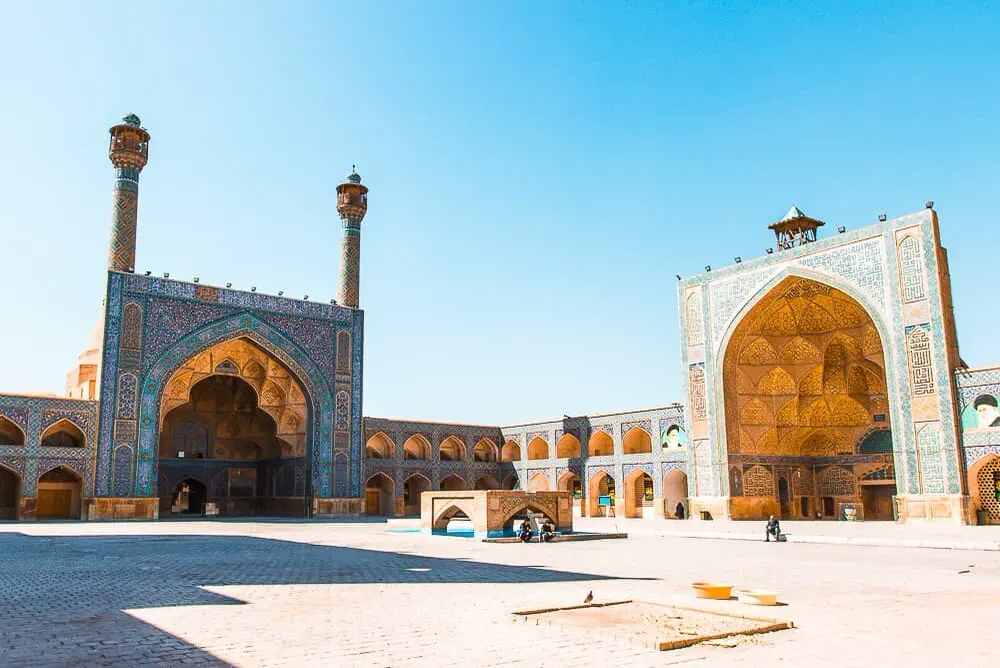
Isfahan is often approached through its celebrated architecture, yet its pleasure lies equally in the distance between landmarks: a shaded passage, the pause of a bridge, or the way a square frames daily life.
Ways into Isfahan
- Architecture
- Urban life
- Craft
Give the city enough time
This is an editorial city guide, not a fixed itinerary. The length and emphasis of a visit should follow the pace, interests, and wider route of the traveller.
A city of civic space and close detail
Isfahan rewards a pace that moves between broad architectural space and smaller acts of looking: the edge of a square, a shaded passage, a bridge crossing, craft, and ordinary movement around a market.
The city is not best understood as a sequence of monuments. Time between landmarks is often what reveals how scale, light, and daily life meet.
Build around one or two meaningful areas
A focused day or longer stay can be shaped around architecture, market life, bridges, craft, or a combination that leaves room to return to a place in different light.
Routes should avoid treating every well-known name as a compulsory stop. The useful question is what deserves a second look.
A place in a wider route
Isfahan often sits between larger urban and desert chapters of a central-Iran journey. Its place in a route depends on time available, pace of travel, and whether the journey is seeking depth in one city or a broader sequence.
Naqsh-e Jahan Square is one of the city’s useful anchors, but it gains meaning through the fabric around it.